
By William H. Benson
The Parallel Lives
Of The NOBLE AMERICAN RELIGIOUS THINKERS AND BELIEVERS:
Roger Williams VS. Cotton Mathers

NEW ARTICLES
The Anti-Hero
In the midst of the Great Depression, in the year 1934, bank robberies and crime seemed to surge. The most notorious of the criminals responsible included: Bonnie Parker and Clyde Barrow, John Dillinger, Pretty Boy Floyd, and Baby Face Nelson.
The press romanticized these perpetrators as modern-day Robin Hoods, who took from the rich and gave to the poor, and yet behind each lay a trail of tears and and an ocean of trauma.
Bonnie and Clyde were responsible for a series of kidnappings, burglaries, gas station robberies, and at least 13 deaths, including 9 police officers and several civilians.
The head of the FBI then, J. Edgar Hoover, struck upon the idea of a Public Enemy Number 1. His agents and other law enforcement personnel would focus upon a single criminal until they arrested or struck him or her down.
On May 23, 1934, a posse, led by Texas Ranger Frank Hamer ambushed Bonnie and Clyde on Louisiana Highway 154 in Biennial Parish, Louisiana. She was 23, and he was 25.
On July 22, 1934, Federal agents shot John Dillinger outside the Biography Theater in Chicago. He was 31 years old, but by then he had robbed 24 banks, and 9 police stations.
On October 22, 1934, 92 years ago this week, FBI agents and local law enforcement agents shot 30-year-old Pretty Boy Floyd inside a cornfield near East Liverpool, Ohio.
The largest funeral ever in the history of Oklahoma occurred six days later, on October 28, when between 20,000 and 40,000 people showed up at Sequoya County’s Atkins Cemetery for a service for this notorious criminal, with at least thirty bank robberies to his record.
On November 11, 1934, Federal agents shot Lester Joseph Gillis, aka Baby Face Nelson, John Dillinger’s accomplice, in Barrington, Illinois, a suburb of Chicago. Nelson was a most vicious bank robber who was credited with killing more FBI agents than any other at that time.
Novels, movie and television scripts, as well as theatre productions on occasion will glorify the bad man and make the legal authority as a dupe or an uninformed fool. An example of the bad man as the anti-hero is the 1977 movie “Smoky and the Bandit.”
Jackie Gleason played the role of Sheriff Burford T. Justice, or “Smoky,” and Burt Reynolds played the role of Bo Darville, or “Bandit,” a truck driver who attempted to drive a semi truck load of beer into Georgia, a criminal act. Comedic car and truck crashes ensue.
In 14th century England, Robin Hood was a criminal, who resisted the Sheriff of Nottingham’s attempts to collect confiscatory taxes from the poor. Robin Hood would steal back the wealth that the rich, in collusion with King Richard I, had extorted from the citizens.
When people read “Robin Hood,” they side with him, the anti-hero, rather than the Sheriff.
Between 1592 and 1594, William Shakespeare wrote for the Lord Chamberlain’s Men “King Richard III.” The play begins when this disabled young man named Richard Plantagenet, the Duke of Gloucester, struts alone onto center stage and begins boasting about himself.
“Now is this winter of discontent made glorious summer by this son of York.” He wants to take credit for the peace that has followed the War of the Roses. Yet, he has no interest in peace.
He says, “I am determined to prove a villain /And hate the idle pleasures of these days. / Plots have I laid, inductions dangerous, / By drunken prophecies, libels, and dreams, / To set my brother Clarence and the King in deadly hate, the one against the other.”
Midway into the play, an audience will turn on King Richard III and recognize that his boasting, lying, name-calling, and murderous acts are criminal. This anti-hero is a very bad man.
Tony Soprano in “The Sopranos,” Walter White in “Breaking Bad,” Frank Underwood in “House of Cards,” Don Draper in “Mad Men,” and Kendall Roy, in “Succession:” all anti-heroes.
Governors Recalled
Four times have governors of the fifty states suffered the indignity of a recall election. On October 28, 1921, the governor of North Dakota, Lynn Frazier, lost the recall election to Ragnvald Nestos: 111,434 for Nestos vs. 107,332 for Frazier. This was a first...
Juliane Koepcke
The zoologist, Hans-Wilhelm Koepcke, graduated from Germany’s University of Kiel, in 1947, with a doctorate in Natural Sciences. He migrated to Lima, Peru, in 1950, and worked at the Museum of Natural History, along with his wife Maria, whom he had met at the...
The Boston Police Strike of 1919
At 5:45 p.m., on Tuesday, September 9, 1919, in Boston, Massachusetts, close to 80% of the city’s policemen, some 1142 men, walked off their jobs, and went on strike, demanding more money, less working hours, better working conditions, and recognition of their union....
Choose a College
Hippocrates, the ancient Greek physician, 460 BC to 370 BC, said the following in relation to the study of medicine, “Life is short, art is long, opportunity fleeting, experiments treacherous, and judgment difficult.” Some have shortened it to, “Skillfulness takes...
Delusions / Illusions
Sociology looks at how people behave in groups: family, work, politics, and religion. A quote: People in a crowd will do or say something that they would hesitate to do or say as an individual. In 2004, a writer named James Surowiecki published a book he entitled...
Immigrants
Music. Two Neil’s. The first is Neil Sadaka. In 1974, Sadaka recorded a haunting song entitled “The Immigrant.” “Harbors opened their arms to the young searching foreigner, come to the light of the beacon of liberty. Was it anything like that when you arrived?...
Older Posts
The Odyssey
The award-winning director Christopher Nolan will release his latest film, “The Odyssey,” this Friday, July 17. Already critics are praising the film, and expect it to win Nolan additional Academy Awards. “Oppenheimer,” won Nolan seven Oscars at the 2024 Academy...
Gettysburg and Vicksburg
In Gettysburg, a small town in Pennsylvania, population 2,400 in 1863, General Robert E. Lee failed a second time to win a crucial battle by leading his troops north, and invading a Union state. If he had won that battle, he could have next attacked Philadelphia or...
Battle of Breeds and Bunker Hill
In the year 1775, two peninsulas jutted into Boston’s Harbor. Each was connected to the Massachusetts mainland by a narrow isthmus.The first peninsula jutted due north, looked like a thumb, and upon it sat the city of Boston. The second jutted due east, looked like a...
July 4 Speeches
In 1834, Ralph Waldo Emerson, lecturer and essayist, moved to Concord, Massachusetts. The following year he bought a home in the town of 2000 residents, where he remained for all his remaining days, with his wife Lidian and their children. Concord lies...
To Prepare for the University
Dave Ramsey, host of the popular call-in radio show, helps listeners pry themselves free from debt by a series of “Baby Steps.” That debt often stems from houses, vehicles, or college. Ramsey ridicules the idea that high school graduates should embark upon an...
Learning Methods
May is for graduations, for ceremonies and parties. Some high school graduates will give up on further formal education and instead will enter straight into the work force. Others will pursue a challenging course of study at a university: mathematics, science,...
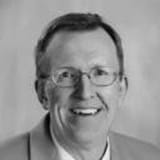
One of University of Northern Colorado’s 2020 Honored Alumni
William H. Benson
Local has provided scholarships for history students for 15 years
A Sterling resident is among five alumni selected to be recognized this year by the University of Northern Colorado. Bill Benson is one of college’s 2020 Honored Alumni.
Each year UNC honors alumni in recognition for their outstanding contributions to the college, their profession and their community. This year’s honorees were to be recognized at an awards ceremony on March 27, but due to the COVID-19 outbreak that event has been cancelled. Instead UNC will recognize the honorees in the fall during homecoming Oct. 10 and 11……
Newspaper Columns

The Duodecimal System
For centuries, the ancient Romans calculated sums with their clunky numerals: I, V, X, L, C, D, and M; or one, five, ten, 50, 100, 500, and 1,000. They knew nothing better.

The Thirteenth Amendment
On Jan. 1, 1863, President Abraham Lincoln signed the Emancipation Proclamation, and by it, he declared that “all persons held as slaves” within the rebellious states “are and henceforward shall be free.” Lincoln’s Proclamation freed some 3.1 million slaves within the Confederacy.

The Fourteenth Amendment
After Congress and enough states ratified the thirteenth amendment that terminated slavery, Congress passed the Civil Rights Act of 1866. This law declared that “all people born in the United States are entitled to be citizens, without regard to race, color, or previous condition of slavery or involuntary servitude.” The Act equated birth to citizenship.

The New-York Packet and the Constitution
Jill Lepore, the Harvard historian, published her newest book a month ago, These Truths: A History of the United States. In a short introduction, she describes in detail the Oct. 30, 1787 edition of a semi-weekly newspaper, The New-York Packet.
Mr. Benson’s writings on the U.S. Constitution are a great addition to the South Platte Sentinel. Its inspiring to see the history of the highest laws of this country passed on to others.
– Richard Hogan
Mr. Benson, I cannot thank you enough for this scholarship. As a first-generation college student, the prospect of finding a way to afford college is a very daunting one. Thanks to your generous donation, my dream of attending UNC and continuing my success here is far more achievable
– Cedric Sage Nixon
Donec bibendum tortor non vestibulum dapibus. Cras id tempor risus. Curabitur eu dui pellentesque, pharetra purus viverra.
– Extra Times
FUTURE BOOKS
- Thomas Paine vs. George Whitefield
- Ralph Waldo Emerson vs. Joseph Smith
- William James vs. Mary Baker Eddy
- Mark Twain vs. Billy Graham
- Henry Louis Mencken vs. Jim Bakker
